• About Us
  • Rules for Editors
  • How It Works
  • Terms of Use
  • Privacy Policy
  • Contribute
  • Contact Us
  • Login
  • Register
Rawallian Community CareConnect
  • Home
  • Categories
  • Ask Question
  • About Us
  • Contact
No Result
View All Result
  • Home
  • Categories
  • Ask Question
  • About Us
  • Contact
No Result
View All Result
Rawallian Community CareConnect
No Result
View All Result
  • About Us
  • Rules for Editors
  • How It Works
  • Terms of Use
  • Privacy Policy
  • Contribute
  • Contact Us
Home Malnutrition

Management of Malnutrition in the Context of HIV, TB, and Other Chronic Illnesses

Chronic infections like HIV and TB increase energy needs and reduce nutrient absorption, making integrated nutrition care essential

Mohammad Najeeb by Mohammad Najeeb
October 10, 2025
in Malnutrition
Reading Time: 6 mins read
1 0
A A
0
1
SHARES
20
VIEWS
Share on FacebookShare on Twitter

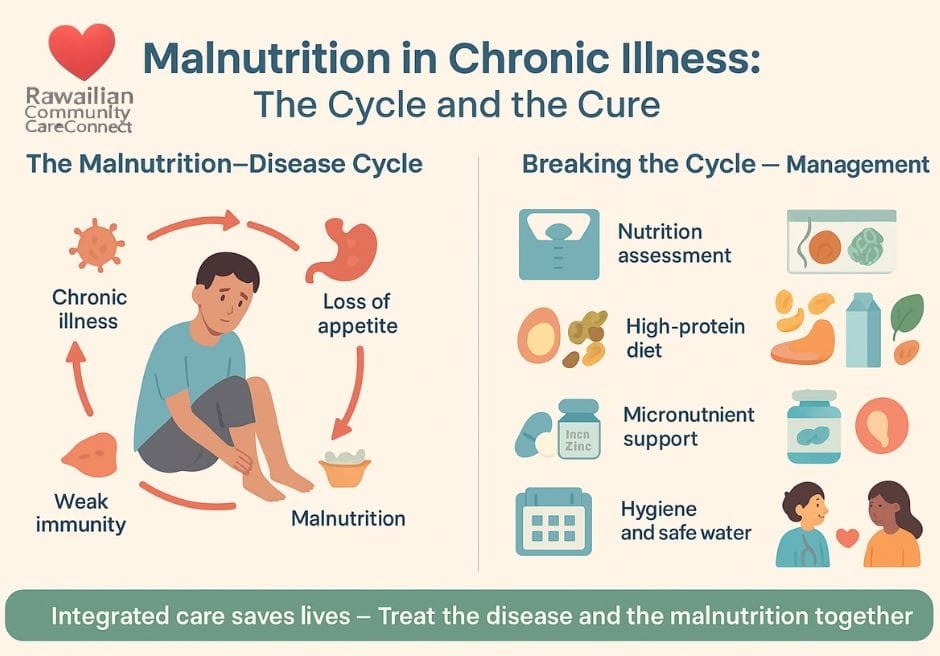
Malnutrition and chronic diseases such as HIV, tuberculosis (TB), diabetes, or cancer are closely connected. When a person has these diseases, the body becomes weak, needs more energy, and loses appetite. The infection and poor nutrition together create a cycle that is very difficult to break.

In Pakistan and other low-resource countries, many patients suffer from both disease and undernutrition. Understanding how these two interact is very important for proper care and recovery.

Understanding the Problem

How Chronic Illness Causes Malnutrition

  • Loss of Appetite: HIV, TB, and other illnesses often make patient lose hunger or feel tired of eating.

  • Poor Absorption: The intestine may not absorb nutrients well, especially during infection.

  • Higher Energy Needs: The body uses more calories to fight infection, but food intake is less.

  • Frequent Vomiting or Diarrhea: Common in HIV and TB, causing loss of nutrients.

  • Side Effects of Medicine: Anti-TB or HIV drugs may cause nausea, bad taste, or mouth sores that make eating hard.

Over time, patient lose weight, muscle, and immunity. This condition is called disease-related malnutrition or secondary malnutrition.

How Malnutrition Worsens Chronic Illness

  • Weak Immunity: Body cannot fight infection, leading to more disease and hospital stay.

  • Slow Recovery: Wound healing and tissue repair become slow.

  • Drug Effectiveness Reduced: Medicines don’t work well when body lacks nutrients.

  • Higher Mortality: Severely malnourished HIV or TB patients have higher risk of death.

Management of Malnutrition in HIV, TB, and Other Chronic Diseases

1. Nutrition Assessment

  • Regular check of weight, height, and body mass index (BMI).

  • Use of MUAC tape to identify moderate or severe malnutrition.

  • Medical history to check appetite, digestion, and illness symptoms.

  • Laboratory tests if possible: hemoglobin, blood sugar, electrolytes, and vitamin levels.

2. Dietary Management

Nutrition plan must match the disease type and patient condition.

For HIV Patients:

  • High-energy and high-protein diet: eggs, milk, lentils, meat, and nuts.

  • Small frequent meals for easy digestion.

  • Add micronutrients (vitamin A, zinc, iron) through diet or supplements.

  • Safe food and clean water to prevent infection.

For TB Patients:

  • Add calorie-dense foods: ghee, milk, rice, pulses, and potatoes.

  • Maintain protein intake to rebuild muscle lost during infection.

  • Take meals after medicine to reduce nausea.

  • Drink plenty of fluids.

For Other Chronic Illnesses (like diabetes or cancer):

  • For diabetes: control sugar but maintain energy with whole grains, milk, lentils.

  • For cancer or chronic infection: easy-to-digest soft meals, liquid foods, soups, and milk shakes.

3. Micronutrient Support

Chronic diseases increase loss of vitamins and minerals.

  • Iron and folic acid for anemia.

  • Vitamin A and zinc for immune strength.

  • Calcium and vitamin D for bone health.

  • Multivitamin daily for HIV and TB patients, as advised by doctor.

4. Medical and Therapeutic Feeding

For severe acute malnutrition (SAM):

  • Use Ready-to-Use Therapeutic Food (RUTF) or F-75/F-100 milk under medical supervision.

  • Hospital-based nutrition rehabilitation if patient cannot eat.

  • Gradual refeeding to avoid refeeding syndrome.

5. Infection Management and Medicine Adherence

  • Strict medicine use is essential. Missing doses of HIV or TB medicine make both disease and malnutrition worse.

  • Treat diarrhea, oral thrush, and other infections early.

  • Promote hygiene and safe food handling to prevent further infections.

6. Psychosocial and Counseling Support

Chronic illness and malnutrition both affect mental health.

  • Provide emotional support, especially for HIV patients facing stigma.

  • Teach family and caregivers about nutritious local food preparation.

  • Counseling on importance of continued treatment and good nutrition even when patient feel weak.

Role of Healthcare Providers

  • Health workers should screen every HIV or TB patient for malnutrition.

  • Link patients with nutrition support programs.

  • Track weight and appetite every visit.

  • Encourage community-based nutrition follow-up after discharge.

Community and Program Response

In Pakistan, integrating nutrition into HIV and TB control programs is vital.

  • Nutrition corners in ART (HIV) and TB centers.

  • Distribution of therapeutic or supplementary food.

  • Collaboration between health, social welfare, and food security programs.

  • Public awareness to reduce stigma and promote healthy diet.

Special Focus on Women and Children

Women with HIV or TB need extra nutrition, especially during pregnancy or breastfeeding.


  • Provide additional meals and iron, calcium, and multivitamins.

  • For children, regular growth monitoring and fortified complementary foods are essential.


Discover more from Rawallian Community CareConnect

Subscribe to get the latest posts sent to your email.

Tags: TBMalnutritionchronic illnessHIV
Share1ShareTweet
Mohammad Najeeb

Mohammad Najeeb

As a result-driven public health physician with over 15 years of progressively responsible experience in maternal and child health, nutrition, and emergency programming, I have demonstrated exceptional proficiency in technical and operational support for program development and implementation. My expertise in program management, monitoring, and results delivery, coupled with my proficiency in cluster/sector management and partnership building, has allowed me to make significant contributions to the field of nutrition. I am well-versed in the areas of innovation, knowledge management, and capacity building, and have extensive experience in population-based nutrition and health assessments, as well as in the delivery community nutrition programmes at all levels. Furthermore, I possess strong interpersonal communication skills, swift management dexterity, and analytical thinking abilities, enabling me to make crucial decisions with ease. I am a highly motivated and compliant team performer, dedicated to achieving excellence in the field of public health

Related Posts

Early Childhood Development

Strengthen Your Body, Grow a Healthy Baby

October 24, 2025
86
Malnutrition

High-Energy Diet for Severe Malnutrition — Practical Guide

October 20, 2025
21
Feeding Severely Malnourished Infants Aged Less Than 6 Months
Malnutrition

Feeding Severely Malnourished Infants Aged Less Than 6 Months

October 16, 2025
72
Feeling Tired All the Time? It Could Be Iron Deficiency Anemia (And Here’s How to Fix It)
Disease

Feeling Tired All the Time? It Could Be Iron Deficiency Anemia (And Here’s How to Fix It)

October 14, 2025
25
Malnutrition

Malnutrition and Its Causes

October 9, 2025
17
Nutrition

Promoting Fish Intake

September 18, 2025
14
Next Post
Keep Little Hands Safe: The Hidden Dangers of Small Objects in Children’s Ears and Noses

Keep Little Hands Safe: The Hidden Dangers of Small Objects in Children’s Ears and Noses

Bone Health and Osteoporosis Prevention

Bone Health and Osteoporosis Prevention

Please login to join discussion

Ask our Experts!

Have questions about common health concerns like colds, allergies, nutrition, or sleep? Don’t guess—get clear, reliable advice from qualified medical professionals. Fill in the form below to Ask the Experts today!

Recent Articles

  • The Hidden Enemy in Our Grains: Keeping Your Baby’s Food Safe from “Ulli” (Molds)
  • The First Gift: Mother’s Milk
  • گردے کی ناکامی میں مبتلا مریض کی خوراک۔
  • Why Taking Iron Pills and Malaria Medicine During Pregnancy Matters for Baby’s Birth Weight
  • Seasonal Changes in Breast Milk Nutrients: How Weather Affects Moms and Babies in Farming Areas

About Rawallian Community CareConnect

Rawailian Community CareConnect is dedicated to empowering caregivers with simple, practical, and compassionate health information in everyday language. We provide a free, bias-free platform where professionals share short articles, videos, and podcasts—under 10 minutes—on caregiving topics across medical specialties. Our goal is to make knowledge accessible, support diverse communities through multilingual translations, and foster connection via forums and expert advice, all while growing collaboratively with minimal resources.

Quick Links

  • About Us
  • Rules for Editors
  • How It Works
  • Terms of Use
  • Privacy Policy
  • Contribute
  • Contact Us

Top Posts & Pages

  • The Hidden Enemy in Our Grains: Keeping Your Baby’s Food Safe from "Ulli" (Molds)
  • The First Gift: Mother's Milk
  • گردے کی ناکامی میں مبتلا مریض کی خوراک۔
  • Why Taking Iron Pills and Malaria Medicine During Pregnancy Matters for Baby’s Birth Weight
  • Seasonal Changes in Breast Milk Nutrients: How Weather Affects Moms and Babies in Farming Areas
  • Are antibiotics necessary in recent onset sore throat?
  • Understanding and Addressing Aggression in Autism
  • شوگر اور پاکستانی غذا
  • Fathers’ Engagement in Early Learning
  • لاہور، سموگ اور فلو ۔ احتیاط اور علاج

Find by Categories

  • Autism Spectrum Disorder (11)
  • Cardio (4)
  • Disease (3)
  • Ear & Nose (1)
  • Early Childhood Development (7)
  • Emergency Care (1)
  • Gastroenterology (4)
  • Gynae (1)
  • Health (8)
  • Malnutrition (7)
  • Maternal & Infant (3)
  • Medicine (4)
  • Nutrition (10)
  • Ortho (2)
  • Paediatric (7)
  • Psychiatry (3)
  • Public Health (5)
  • Uncategorized (1)
  • About Us
  • Rules for Editors
  • How It Works
  • Terms of Use
  • Privacy Policy
  • Contribute
  • Contact Us

© 2025 Rawallian Community CareConnect

Welcome Back!

Sign In with Facebook
Sign In with Google
OR

Login to your account below

Forgotten Password? Sign Up

Create New Account!

Sign Up with Facebook
Sign Up with Google
OR

Fill the forms below to register

All fields are required. Log In

Retrieve your password

Please enter your username or email address to reset your password.

Log In

Add New Playlist

No Result
View All Result
  • Home
  • Rules and SOPs for Editors
  • Categories
  • About Us
  • My account
  • Contact
  • Login
  • Sign Up

© 2025 Rawallian Community CareConnect