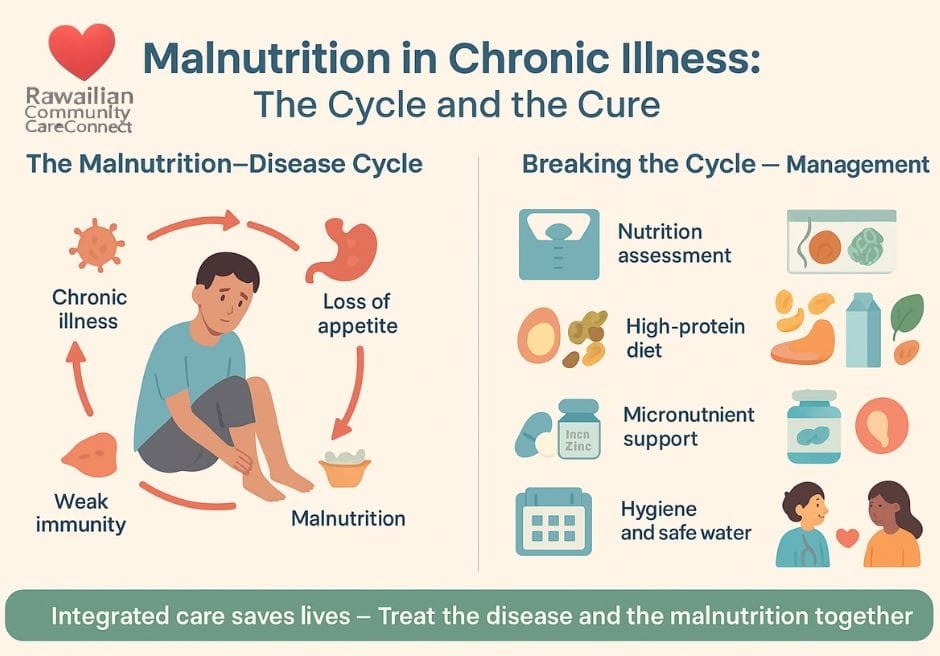
Malnutrition and chronic diseases such as HIV, tuberculosis (TB), diabetes, or cancer are closely connected. When a person has these diseases, the body becomes weak, needs more energy, and loses appetite. The infection and poor nutrition together create a cycle that is very difficult to break.
In Pakistan and other low-resource countries, many patients suffer from both disease and undernutrition. Understanding how these two interact is very important for proper care and recovery.
Understanding the Problem
How Chronic Illness Causes Malnutrition
Loss of Appetite: HIV, TB, and other illnesses often make patient lose hunger or feel tired of eating.
Poor Absorption: The intestine may not absorb nutrients well, especially during infection.
Higher Energy Needs: The body uses more calories to fight infection, but food intake is less.
Frequent Vomiting or Diarrhea: Common in HIV and TB, causing loss of nutrients.
Side Effects of Medicine: Anti-TB or HIV drugs may cause nausea, bad taste, or mouth sores that make eating hard.
Over time, patient lose weight, muscle, and immunity. This condition is called disease-related malnutrition or secondary malnutrition.
How Malnutrition Worsens Chronic Illness
Weak Immunity: Body cannot fight infection, leading to more disease and hospital stay.
Slow Recovery: Wound healing and tissue repair become slow.
Drug Effectiveness Reduced: Medicines don’t work well when body lacks nutrients.
Higher Mortality: Severely malnourished HIV or TB patients have higher risk of death.
Management of Malnutrition in HIV, TB, and Other Chronic Diseases
1. Nutrition Assessment
Regular check of weight, height, and body mass index (BMI).
Use of MUAC tape to identify moderate or severe malnutrition.
Medical history to check appetite, digestion, and illness symptoms.
Laboratory tests if possible: hemoglobin, blood sugar, electrolytes, and vitamin levels.
2. Dietary Management
Nutrition plan must match the disease type and patient condition.
For HIV Patients:
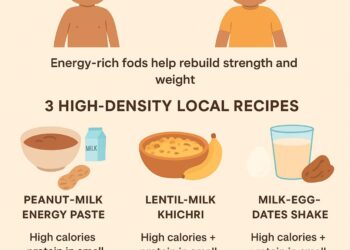
High-energy and high-protein diet: eggs, milk, lentils, meat, and nuts.
Small frequent meals for easy digestion.
Add micronutrients (vitamin A, zinc, iron) through diet or supplements.
Safe food and clean water to prevent infection.
For TB Patients:
Add calorie-dense foods: ghee, milk, rice, pulses, and potatoes.
Maintain protein intake to rebuild muscle lost during infection.
Take meals after medicine to reduce nausea.
Drink plenty of fluids.
For Other Chronic Illnesses (like diabetes or cancer):
For diabetes: control sugar but maintain energy with whole grains, milk, lentils.
For cancer or chronic infection: easy-to-digest soft meals, liquid foods, soups, and milk shakes.
3. Micronutrient Support
Chronic diseases increase loss of vitamins and minerals.
Iron and folic acid for anemia.
Vitamin A and zinc for immune strength.
Calcium and vitamin D for bone health.
Multivitamin daily for HIV and TB patients, as advised by doctor.
4. Medical and Therapeutic Feeding
For severe acute malnutrition (SAM):
Use Ready-to-Use Therapeutic Food (RUTF) or F-75/F-100 milk under medical supervision.
Hospital-based nutrition rehabilitation if patient cannot eat.
Gradual refeeding to avoid refeeding syndrome.
5. Infection Management and Medicine Adherence
Strict medicine use is essential. Missing doses of HIV or TB medicine make both disease and malnutrition worse.
Treat diarrhea, oral thrush, and other infections early.
Promote hygiene and safe food handling to prevent further infections.
6. Psychosocial and Counseling Support
Chronic illness and malnutrition both affect mental health.
Provide emotional support, especially for HIV patients facing stigma.
Teach family and caregivers about nutritious local food preparation.
Counseling on importance of continued treatment and good nutrition even when patient feel weak.
Role of Healthcare Providers
Health workers should screen every HIV or TB patient for malnutrition.
Link patients with nutrition support programs.
Track weight and appetite every visit.
Encourage community-based nutrition follow-up after discharge.
Community and Program Response
In Pakistan, integrating nutrition into HIV and TB control programs is vital.
Nutrition corners in ART (HIV) and TB centers.
Distribution of therapeutic or supplementary food.
Collaboration between health, social welfare, and food security programs.
Public awareness to reduce stigma and promote healthy diet.
Special Focus on Women and Children
Women with HIV or TB need extra nutrition, especially during pregnancy or breastfeeding.
Provide additional meals and iron, calcium, and multivitamins.
For children, regular growth monitoring and fortified complementary foods are essential.
Discover more from Rawallian Community CareConnect
Subscribe to get the latest posts sent to your email.