Malnutrition is one of the most serious health issue in Pakistan and many other developing countries. It not only harm the body of child but also the mind, the learning power, and even the future earning ability. When a child is weak in early years, the damage many times stay for whole life. That is why malnutrition is not only family problem, it is also national problem, because it reduce human capital.
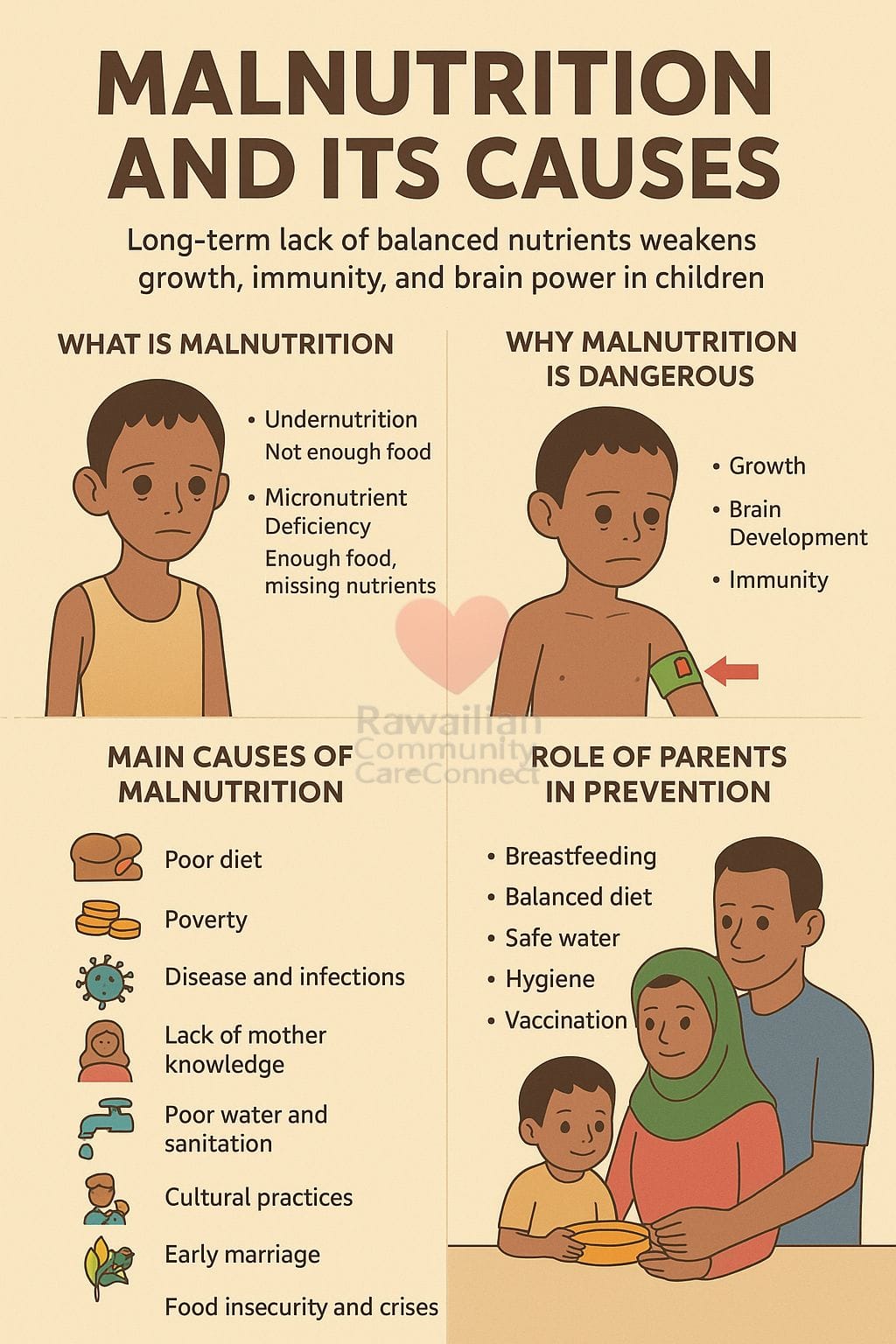
What is Malnutrition
Malnutrition means the child is not getting the right type of food in the right amount. It can happen in two ways:
Undernutrition – child get less food than body need. This make body very thin (wasting) or very short compared to age (stunting).
Micronutrient Deficiency – child eat enough food but not enough variety. For example, too much roti and rice, but no egg, milk, or vegetable. This cause lack of iron, vitamin A, zinc, iodine, and protein.
Both forms are dangerous. They can reduce immunity, make child sick again and again, and stop proper growth of body and brain.
Why Malnutrition is Dangerous
Malnutrition is not only about hunger. It has deep impact on every part of child life:
Growth: Child remain small, thin, weak bones, late walking or talking.
Brain Development: Malnourished child has less memory, slow learning, low school performance.
Immunity: They catch cough, diarrhea, pneumonia more often. Recovery also slow.
Future Life: Weak child becomes weak adult, with low earning power, more chance of chronic disease like diabetes or heart problem.
WHO call first 1,000 days of life (from pregnancy till 2 years) the “golden window”. If nutrition poor in this time, damage is mostly permanent.
Main Causes of Malnutrition
Poor Diet
In many Pakistani homes, meal is mostly roti, chai, rice, potato. These fill stomach but do not give protein, vitamin, or mineral. Child eat but still become weak because food is not balanced.Poverty
Low-income families cannot buy fruits, milk, or meat. They spend money on cheap filling foods. In rural areas, food sometimes available but family sell it to earn money.Disease and Infections
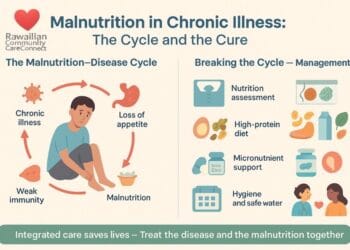
Frequent diarrhea, worm infestation, chest infection, measles, and other illness reduce appetite. Even if food is eaten, body cannot absorb. Malnutrition and disease make a cycle: weak child fall sick, sickness make child weaker.Lack of Knowledge
Many mothers do not know importance of breastfeeding or balanced complementary food. They give water or tea to small baby, or feed only one type of food like rice. Some think egg or meat are “heavy” for child, so they avoid.Poor Water and Sanitation
In many villages and slums, drinking water is dirty. This cause diarrhea, typhoid, worm, which waste nutrients. Without clean water and toilet, child cannot grow healthy even with food.Cultural and Gender Practices
In some homes, men eat first and best portion. Women and children eat later, sometimes less food left. In many areas, girls are given less food than boys. This discrimination increase malnutrition among girls.Early Marriage and Poor Maternal Health
Weak mother give birth to weak baby. If mother herself is malnourished during pregnancy, the baby born small and underweight. Early marriage also increase this risk.Food Insecurity and Crises
Floods, drought, inflation, and displacement reduce food access. In Pakistan, natural disaster and rising prices push many families into food insecurity.
Role of Parents in Prevention
Both mother and father play big role:
Mother should breastfeed baby exclusively for 6 months, then give mashed fruit, vegetable, egg, lentil, rice porridge. She should learn to give variety of food, not only one type.
Father must provide financial support and encourage family to buy nutritious food, not only tea and snacks. He should also support mother in household and child care, so she give better attention to feeding.
Parents must give equal food to both boys and girls. Child learn by seeing parents, so eating healthy food together as family also create good habit.
How to Prevent Malnutrition
Exclusive Breastfeeding – first 6 months only mother milk, no water, no tea.
Balanced Complementary Feeding – from 6 months give small meals 3–4 times daily. Include mashed fruits, vegetable, egg, meat, fish, lentil, and dairy.
Micronutrient Supplement – iron syrup, vitamin A, zinc given through health worker help to prevent hidden hunger.
Safe Water and Hygiene – wash hands before eating, drink boiled or filtered water, use latrine.
Vaccination – protect from measles, pneumonia, diarrhea, which are big killers of malnourished children.
Educating Mothers – community sessions, lady health workers, and school programs must guide mothers on child feeding.
Government Support – provide food subsidy, school meal programs, fortification of flour, oil, and salt with vitamins.
Community Role – neighbors, elders, and religious leaders can promote equal feeding of boys and girls, discourage harmful practices.
Case of Pakistan
According to National Nutrition Survey, almost 38% children in Pakistan are stunted, 18% wasted, and more than 40% underweight. This means millions of children are not reaching their full height and brain potential. Malnutrition is higher in rural Sindh, Baluchistan, and tribal areas. Poverty, lack of women education, and poor health services are major drivers.
Long-Term Impact
Malnutrition is not just childhood issue. Stunted children become adults with less productivity. This directly reduce GDP and economic growth of country. A weak generation cannot compete in global knowledge economy. Investment in nutrition is therefore not only health matter, but also economic strategy.
Malnutrition is a silent killer and also silent thief of future. It steal height, brain power, school performance, and even economic progress of whole nation. The causes are many: poverty, poor diet, disease, lack of knowledge, gender discrimination, and poor sanitation. But solution is also known: breastfeeding, balanced diet, clean water, education of mothers, government programs, and equal care for boys and girls.
Every parent, community, and government has role to play. A well-fed child today means a strong, educated, productive adult tomorrow.
Malnutrition is preventable. With right action, we can break the cycle.
Discover more from Rawallian Community CareConnect
Subscribe to get the latest posts sent to your email.