Severe malnutrition needs fast, careful action. In clinics and community programmes, treatment often uses specially made therapeutic milks (F-75, F-100) and ready-to-use therapeutic food (RUTF). These products are designed to safely give the high energy and micronutrients that a very weak child needs. Community and home foods can help when supervised, but RUTF/F-100 remain standard of care in most SAM programmes. WHO+1
Basic principles
High energy & protein: food must give many calories and good protein in small volume.
Frequent feeding: small feeds every 2–3 hours for weak children.
Micronutrients: iron, zinc, vitamin A and others are essential — use supplements as advised by health worker.
Treat illness: infections (diarrhoea, TB, HIV) must be treated together with nutrition.
Medical supervision: SAM requires screening (MUAC, weight-for-height) and link to local CMAM or hospital services. NCBI+1
Safety note (read first)
If you see severe danger signs (child not feeding, very weak, severe diarrhoea, convulsions), go to hospital now.
Home high-energy recipes are not replacement for RUTF or hospital feeds in complicated SAM. Use them only under guidance of local health staff or when RUTF is not immediately available and health worker advises. UNICEF+1
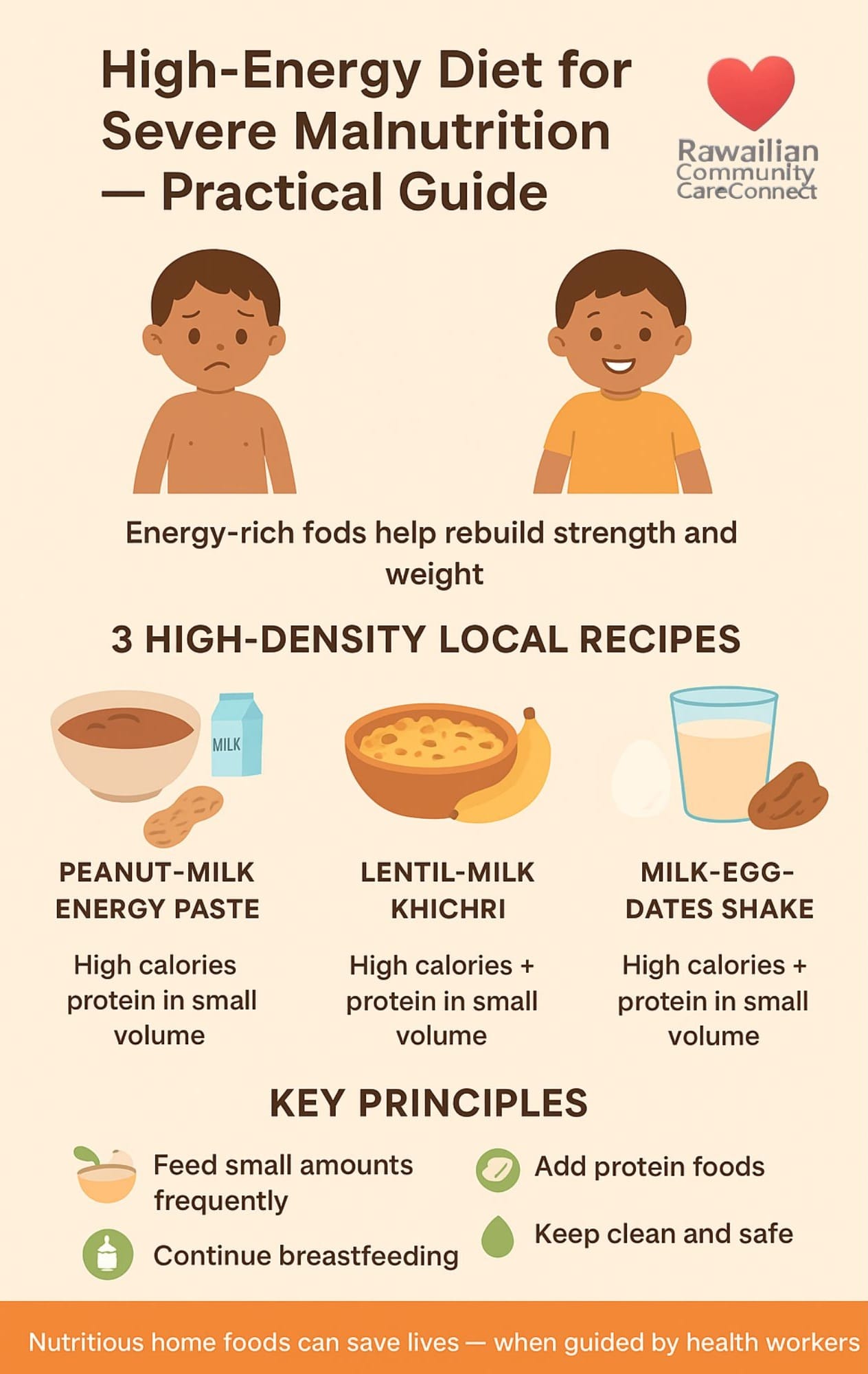
Three easy high-density recipes (local, cheap, easy to make)
1) Peanut-Milk Energy Paste — (RUTF-style, family/clinic use)
Good where peanut allergy is not present. Soft paste, high in fat and energy.
Ingredients (makes ~10 small servings)
500g roasted peanuts (skin removed) — ground to paste
150g full-cream milk powder
150g powdered sugar or jaggery (adjust to taste)
120–150 ml vegetable oil or melted ghee
1 tsp salt
Option: small sachet multivitamin/mineral powder (if available and advised by health worker)
Method
Grind peanuts to smooth paste in blender.
Mix milk powder and sugar into paste. Add oil slowly until smooth, thick paste forms. Add salt.
If health worker provided micronutrient mix, add per instructions and mix.
Give in small spoonfuls frequently (2–4 tsp every 30–60 minutes for weak child) or as advised.
Notes: store in clean container, room temp short term; use within 48–72 hours if kept cool. Seek health worker advice about portion and duration. This paste mimics energy density of RUTF but is not identical — use only when supervised. UNICEF+1
2) Lentil-Milk Khichri (High-Energy Porridge) — (for older infants & young children)
Soft, easy to digest, good protein + carbs.
Ingredients (serves 4 as supplement)
1 cup yellow moong dal (split) or masoor dal, washed
½ cup white rice or broken wheat (dalia)
2 cups full-fat milk (or 1 cup milk + 1 cup water)
2 tbsp ghee or oil
1 medium banana, mashed or 2 tbsp dates paste (for energy)
Pinch of salt
Method
Cook dal and rice together with 3–4 cups water until very soft and porridge-like.
Mash to smooth consistency for small child. Add milk and ghee; simmer 2–3 minutes.
Stir in mashed banana or dates for calories and taste. Cool to warm before feed.
Use: give in small frequent feeds. Good as complementary feed for child >6 months. Add a boiled egg (mashed) when the child can accept solids to raise protein. World Health Organization
3) Milk-Egg-Dates Shake (Energy + Protein) — (fast, no cooking)
Quick high-energy drink for older infants and children who can swallow liquids.
Ingredients (per serving)
200 ml full-fat milk (warm)
1 egg (fully cooked and cooled) or 1 tbsp powdered milk for safety if raw egg is avoided
2 soft dates or 1 tbsp date syrup / jaggery dissolved
1 tsp ghee (optional)
Mash or blend to smooth texture
Method
If using whole egg, boil egg hard, mash well and blend into warm milk with dates and ghee. If using powdered milk, mix in directly.
Serve warm in small frequent sips.
Notes: eggs add quality protein; dates and ghee add dense calories. Use for children >6 months and where no egg allergy. For infants under medical care, follow health worker advice. PMC
Practical tips for home feeding
Feed in calm setting, encourage but do not force.
Offer small frequent amounts; try different textures if one is refused.
Keep hygiene: boil/clean utensils and water to avoid infections.
Continue breastfeeding whenever possible — breast milk remains vital even while giving high-energy foods. WHO
When to seek health help: No weight gain after several days, poor appetite, signs of infection, vomiting, or severe weakness — contact nearest nutrition programme or hospital. CMAM programmes in Pakistan run community screening and provide RUTF and F-100/F-75 where needed. UNICEF+1
Discover more from Rawallian Community CareConnect
Subscribe to get the latest posts sent to your email.