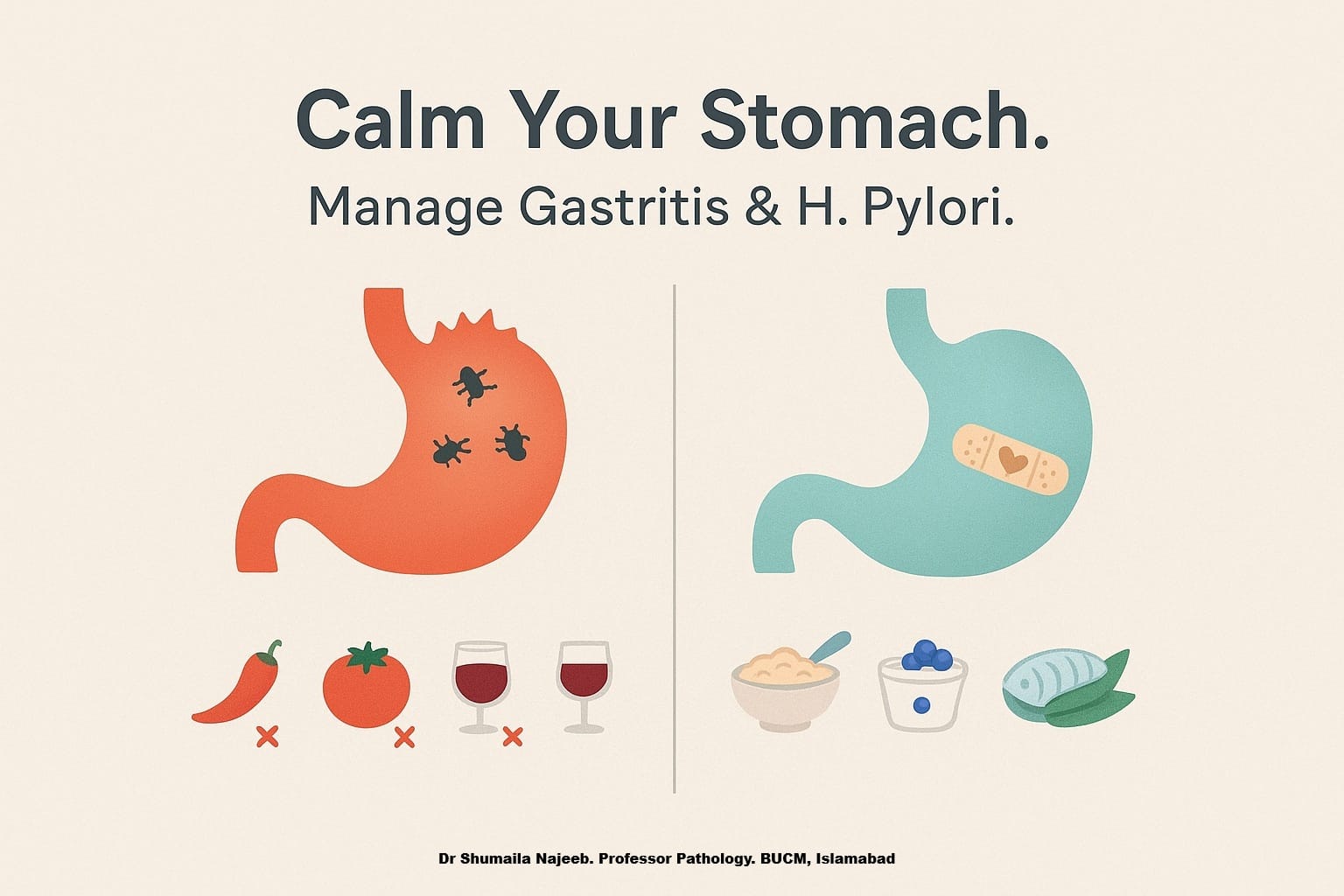
We’ve all had a stomach ache now and then. But if you’re feeling a burning pain, constant bloating, or nausea regularly, it might be more than just a simple upset stomach. You could be dealing with Gastritis.
Don’t worry, let’s break down what that means and what you can do about it.
What is Gastritis, Anyway?
Imagine the inside of your stomach has a special lining. This lining is tough—it can handle the strong acid that breaks down your food. Gastritis is just a fancy word for when this stomach lining gets swollen, irritated, or inflamed.
Think of it like a protective glove. When the glove is strong, you can handle hot dishes. But if the glove gets a hole in it, the heat hurts your skin. Gastritis is like having a “hole” or weakness in your stomach’s protective lining, so the acid starts to irritate the sensitive tissue underneath.
What Causes This Irritation? Meet H. Pylori
There are a few things that can cause gastritis, like overusing painkillers (like ibuprofen) or drinking too much alcohol. But one of the most common culprits is a tiny bacteria called Helicobacter Pylori, or H. Pylori for short.
- H. Pylori is a type of germ that can live in the sticky mucus of your stomach lining.
- It’s like an unwanted guest that weakens your stomach’s natural defenses, making it easier for the acid to cause irritation and sores (ulcers).
- Many people have H. Pylori and don’t know it, but for others, it can cause big problems.
Common Signs Your Stomach is Sending You
If you have gastritis, you might feel:
- A burning or gnawing pain in your upper belly (like hunger pangs, but worse).
- Feeling full too quickly when you eat, or feeling bloated after meals.
- Nausea or an upset stomach.
- Frequent burping.
- Loss of appetite.
How to Manage and Prevent Gastritis (The Friendly Food Plan)
Whether you’re being treated for H. Pylori or just want to calm an angry stomach, what you eat plays a huge role. The goal is to be kind to your stomach lining.
🚫 Foods to Avoid (The “Troublemakers”)
These foods can increase acid or irritate your stomach lining. Try to limit them:
- Spicy Foods: Chili peppers, hot sauce, and curries.
- Acidic Foods: Tomatoes, oranges, lemons, and their juices.
- Fried & Fatty Foods: Greasy fries, burgers, and fatty meats.
- Carbonated Drinks: Sodas and fizzy drinks can cause bloating.
- Caffeine: Coffee, tea, and some sodas.
- Alcohol: It’s a major irritant for the stomach lining.
✅ Foods to Enjoy (The “Soothers”)
These foods are gentle and can help your stomach heal:
- Fiber-Rich Foods: Oatmeal, apples, carrots, and broccoli.
- Lean Proteins: Skinless chicken, turkey, fish, and eggs.
- Healthy Fats: Avocado, olive oil, and nuts (in moderation).
- Non-Acidic Veggies: Green beans, spinach, and cucumbers.
- Probiotic-Rich Foods: Yogurt, kefir, and kimchi. These contain “good” bacteria that can help your gut health, especially if you’re on antibiotics for H. Pylori.
Cooking Tip: Choose baking, boiling, grilling, or steaming instead of frying.
What to Do If You’re Under Treatment for H. Pylori
If your doctor diagnoses you with an H. Pylori infection, they will give you a special treatment. This usually involves two different antibiotics (to kill the bacteria) and a medicine to reduce stomach acid (called a PPI). This is often called “Triple Therapy.”
Here’s how to help this treatment work its best:
- Take ALL Your Medicine: This is the most important step. Even if you start feeling better, you must finish every single pill. Stopping early can let the bacteria come back, stronger than before.
- Stick to Your “Friendly Food” Plan: The treatment can be tough on your stomach. Eating gentle foods will help you feel less nauseous and more comfortable.
- Say No to Alcohol: Alcohol can interfere with the antibiotics and irritate your stomach even more. It’s best to avoid it completely until you finish treatment.
- Manage Side Effects: The antibiotics might cause a metallic taste in your mouth or slight diarrhea. Eating yogurt can help with digestion. If side effects are bad, talk to your doctor—don’t just stop the medicine.
- Follow Up: Your doctor will likely test you again after treatment to make sure the H. Pylori is gone. Make sure you go for this follow-up appointment.
Simple Habits for a Happy Stomach
- Eat Smaller Meals: Instead of three large meals, try five or six smaller ones. This prevents your stomach from getting too full and producing a large amount of acid at once.
- Don’t Lie Down After Eating: Stay upright for at least 2-3 hours after a meal to help keep stomach acid down.
- Manage Stress: High stress can make your stomach produce more acid. Try simple breathing exercises, going for a walk, or listening to calming music.
Final Thought: Dealing with gastritis or H. Pylori can be uncomfortable, but it is manageable. By working with your doctor and being kind to your stomach with your food choices, you can put out the fire and get back to feeling like yourself again.
Disclaimer: This blog is for educational purposes only. Always consult with a healthcare professional for diagnosis and a treatment plan tailored to your specific needs.
Discover more from Rawallian Community CareConnect
Subscribe to get the latest posts sent to your email.