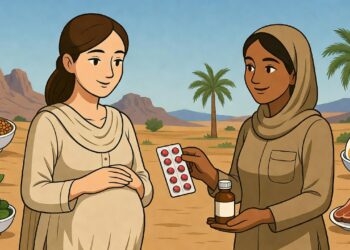
In the lush green fields of Punjab and Sindh, we take great pride in our harvests. We grow the wheat for our rotis and the corn for our porridges. For many mothers, there is no greater joy than feeding their child a bowl of fresh dalia or khichdi made from the season’s crop.
But there is a hidden enemy that often hides in our grain stores—something the doctors call Aflatoxins, but we know better as the poisons produced by “Ulli” (mold or fungus). Today, let’s learn how to protect our babies from this invisible threat.
What is this Invisible Poison?
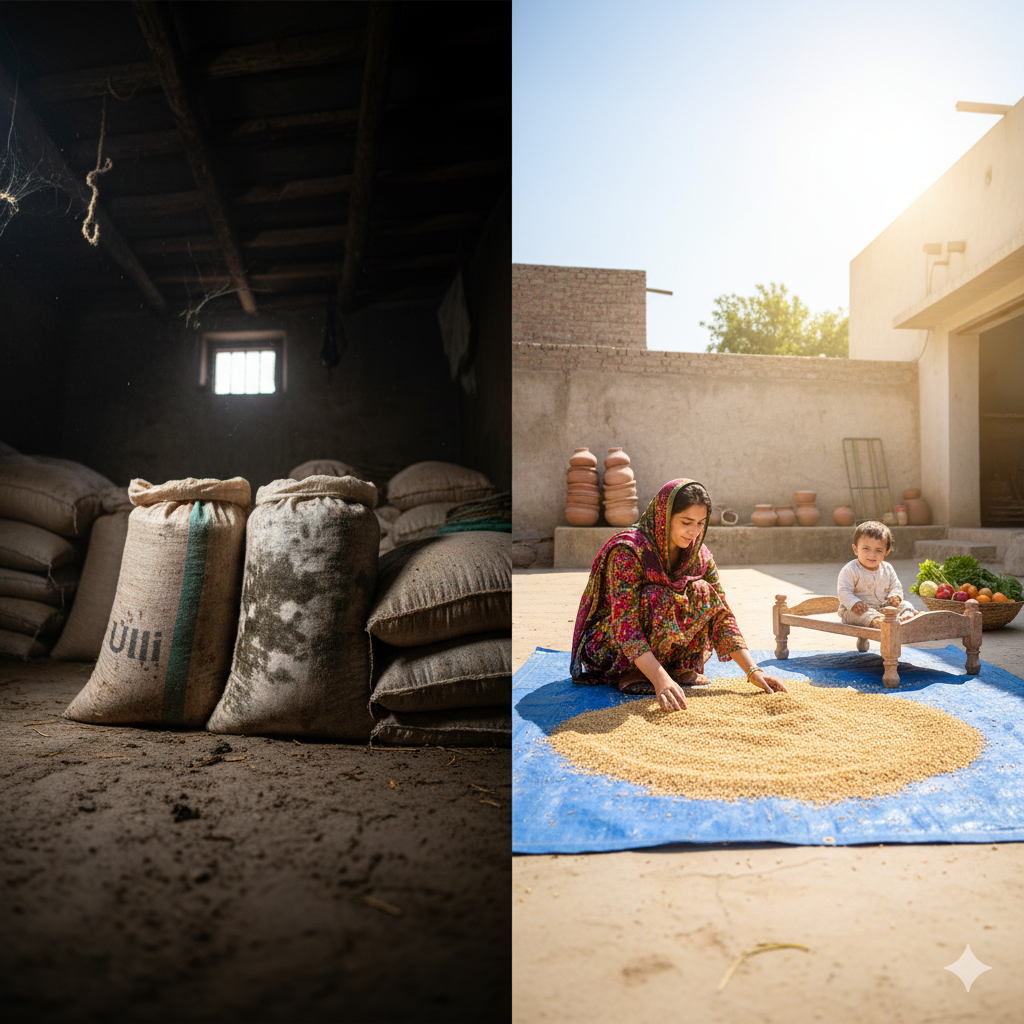
When we store our wheat, maize (makai), or cottonseeds in places that are damp, hot, or crowded, a tiny green or black mold (Ulli) begins to grow. Even if we scrape the mold off, it leaves behind a “poison” that we cannot see, smell, or taste.
This poison is very strong. When a mother eats bread made from this grain, or drinks milk from a cow that ate contaminated fodder, the poison travels through her body and into her breastmilk. When a 6-month-old baby starts eating porridge made from affected grain, they swallow the poison directly.
How Does it Affect the Baby?
You might wonder why a child who is being fed well still looks thin or stays short for their age. This hidden poison is often the reason.
- Stops Growth (Stunting): The poison damages the baby’s stomach lining. Even if the baby eats good food, their body cannot “soak up” the strength from it. This leads to children staying shorter and weaker than they should be.
- Weakens the Shield: It attacks the baby’s immune system (their internal army). A baby exposed to these toxins falls sick with fever, cough, and flu much more often.
- Hurts the Liver: Just as it hurts adults, this poison is very hard on a tiny baby’s liver.
5 Steps to Keep Your Family Safe
We cannot always see the poison, but we can stop it from growing. Here is how you can protect your home:
1. Dry Your Grains Well Before storing wheat or corn, make sure it is bone-dry. Spread it out in the hot sun on a clean sheet. If the grain “snaps” when you bite it, it is dry enough. If it is soft or chewy, it still has moisture that will grow mold.
2. Watch the Storage Area Store your grain in a cool, dry place. Keep the bags off the floor by placing them on wooden planks. This prevents “seep” (moisture) from the ground from getting into the bags.
3. Check the Animal Feed If you have a buffalo or cow at home, remember: What the cow eats, the baby drinks. If you feed your cattle moldy bread or damp “Khal” (cottonseed cake), the poison will come out in the milk. Always give your animals clean, dry fodder.
4. Inspect the Flour Before grinding your wheat at the local atta chakki, look closely at the grains. If you see any green, black, or grey powder, or if the grain smells “musty,” do not use it for the baby’s food.
5. Diversify the Plate Don’t rely only on wheat or corn for the baby’s meals. Mix it up! Give them eggs, seasonal fruits like mashed bananas, and vegetables. By giving different types of food, you reduce the chance of the baby getting too much of one hidden poison.
A Note for Every Mother
Breastfeeding is still the best and safest way to feed your baby. Even if there is a risk of these toxins in the environment, your breastmilk provides the antibodies the baby needs to fight back. The goal is not to stop breastfeeding, but to make sure your diet and the baby’s first solids are as clean as possible.
By keeping our storerooms dry and our grains clean, we are making sure our children grow up tall, strong, and full of life.
Key Message for Home:
- Sun is your friend: Dry all grains thoroughly in the sun.
- Keep it dry: Moisture grows “Ulli” (mold), and mold brings poison.
- Fresh is best: Use the cleanest, brightest grains for the baby’s first porridge.
Discover more from Rawallian Community CareConnect
Subscribe to get the latest posts sent to your email.