
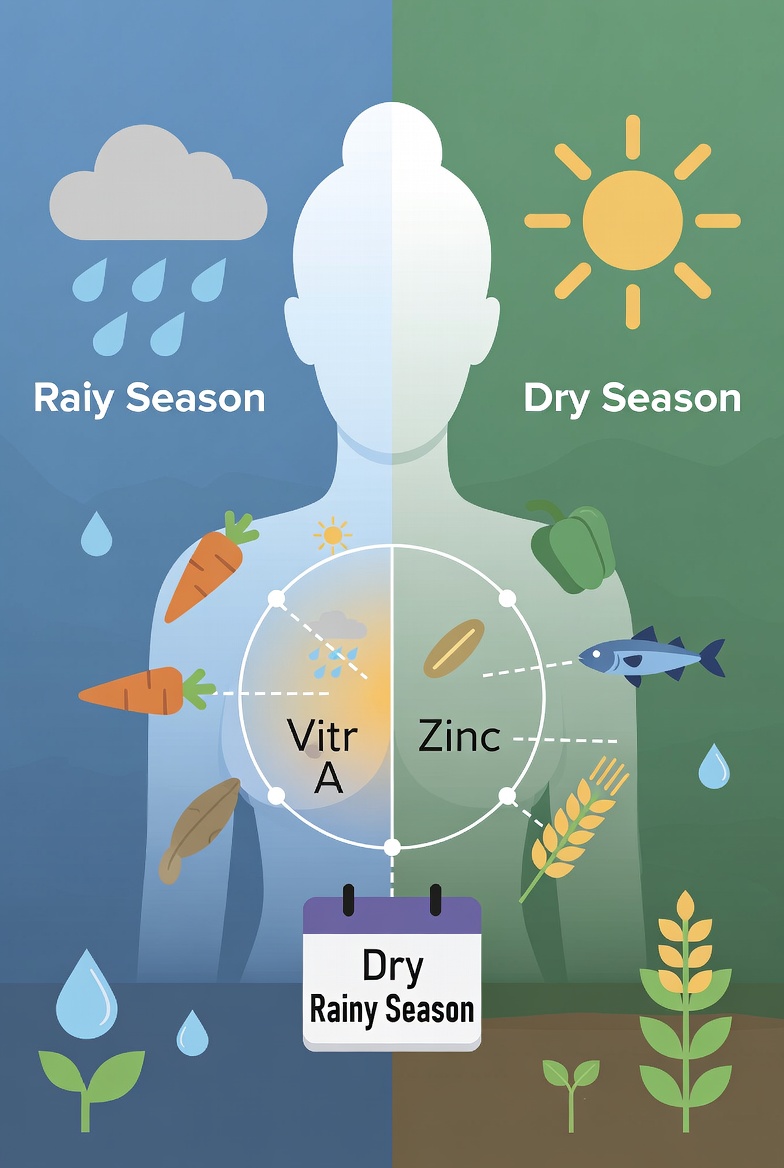
Breast milk is often called nature’s perfect food for babies. It provides all the nutrients a newborn needs to grow strong and healthy. But did you know that the quality of breast milk can change with the seasons? In farming communities, where people rely on what they grow, the rainy and dry seasons play a big role in what moms eat. This, in turn, affects key nutrients like zinc and vitamin A in their milk. Let’s break this down in simple terms.

First, why are zinc and vitamin A so important? Zinc helps babies build a strong immune system, fight infections, and grow properly. Without enough, kids might get sick more often or not develop well. Vitamin A is crucial for good eyesight, healthy skin, and protecting against diseases like measles. Moms pass these through breast milk, but the amounts depend on what the mom eats. If her diet lacks variety, the milk might not have enough of these micronutrients—tiny but vital elements.
In agrarian communities, like those in rural Africa, Asia, or Latin America, life revolves around farming. During the rainy season, things are usually better. Rain helps crops grow, so there’s more fresh food available. Think fruits like mangoes and oranges (rich in vitamin A), vegetables like carrots and spinach, and even nuts or grains for zinc. Moms can eat a diverse mix of foods, which boosts their nutrient intake. As a result, their breast milk becomes richer in zinc and vitamin A. Studies show that in places like rural Bangladesh or Ethiopia, breast milk during wet months has higher levels of these nutrients because moms have access to greens, fish, and seasonal produce.
But the dry season tells a different story. When rain stops, fields dry up, and food becomes scarce. People might rely on stored grains like rice or millet, which are filling but low in variety. Fresh veggies and fruits disappear, and animal products like meat or dairy might be rare due to cost or availability. This leads to “low dietary diversity”—basically, eating the same boring stuff every day. Moms’ bodies can’t get enough zinc from things like seeds or beans if they’re not around, or vitamin A from colorful veggies. Research from areas like Malawi highlights how breast milk zinc drops by up to 20-30% in dry periods, and vitamin A can fall short too. This isn’t because moms aren’t trying; it’s the environment limiting options.
The impact on babies is real. In these communities, many infants are breastfed exclusively for the first six months. If milk lacks nutrients, babies might face stunted growth, weak immunity, or even blindness from vitamin A deficiency. It’s a cycle: poor seasons mean poor diets, leading to poorer health for the next generation. Climate change makes this worse, with longer dry spells in some regions.
So, what can be done? Simple solutions help. Governments and aid groups promote home gardens that work year-round, or supplements for moms during dry times. Educating families on affordable nutrient-rich foods, like eggs or fortified cereals, can make a difference. In Kenya, programs teaching moms to dry and store veggies have improved milk quality.
In the end, seasonal changes remind us how connected we are to nature. For farming families, a good rainy season means healthier moms and babies. By supporting better diets all year, we can ensure breast milk stays nutrient-packed, giving every child a strong start. This isn’t just science—it’s about real lives in villages worldwide.
Discover more from Rawallian Community CareConnect
Subscribe to get the latest posts sent to your email.