Feeling Tired All the Time? It Could Be Iron Deficiency Anemia (And Here’s How to Fix It)
Do you often feel unusually tired, weak, or get out of breath doing simple tasks? You might brush it off as just being busy or not sleeping well. But sometimes, these are your body’s way of sending an important signal: you might have iron deficiency anemia.
Don’t let the medical term scare you. Let’s break down what it means in simple words and, most importantly, how you can prevent it.
What is Iron Deficiency Anemia?
First, let’s talk about iron. Iron is a mineral that comes from the food you eat. Think of it as a key ingredient your body needs to make hemoglobin.
Hemoglobin is a special protein inside your red blood cells. Its main job is to carry oxygen from your lungs to every other part of your body—your brain, your muscles, everything!
When you don’t have enough iron, your body can’t make enough healthy hemoglobin. This means your red blood cells can’t carry enough oxygen. This condition is called iron deficiency anemia.
Your body’s tissues and organs aren’t getting the fuel they need, which is why you feel so tired and worn out.
Common Signs to Watch For
If you have iron deficiency anemia, you might experience:
- Extreme tiredness and weakness
- Pale skin
- Shortness of breath
- Headaches or dizziness
- Fast or irregular heartbeat
- Brittle nails
- Unusual cravings for non-food items like ice, dirt, or starch (this is called pica)
How Can You Prevent It? The Power is on Your Plate!
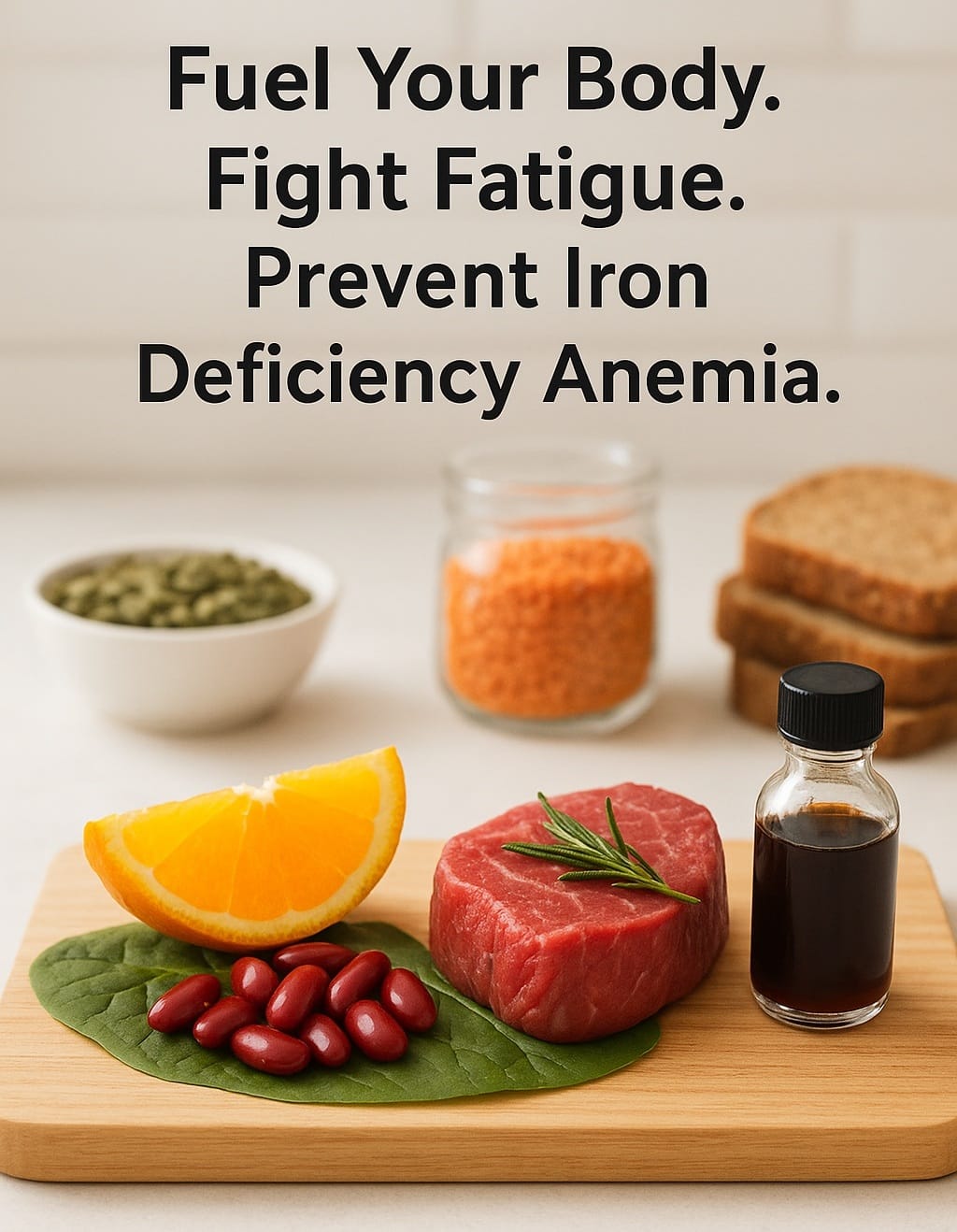
The good news is that for most people, iron deficiency anemia is preventable through a healthy, iron-rich diet. Here’s your simple guide to getting enough iron.
There are two types of iron in food, and your body absorbs them differently.
1. Heme Iron: The Easy-to-Absorb Kind
This type of iron comes from animal sources and is easily absorbed by your body.
Great sources include:
- Red meat: Beef, lamb, and liver (but eat liver in moderation).
- Poultry: Chicken and turkey, especially the dark meat.
- Fish and seafood: Tuna, salmon, shrimp, and clams.
- Eggs
2. Non-Heme Iron: The Plant-Based Kind
This iron comes from plant sources. It’s not absorbed as easily, but it’s still a very important source, especially for vegetarians and vegans.
Excellent sources include:
- Beans and Lentils: Chickpeas, kidney beans, black beans, and lentils.
- Tofu and Soybeans
- Dark Green Leafy Vegetables: Spinach, kale, and broccoli.
- Nuts and Seeds: Pumpkin seeds, cashews, and almonds.
- Fortified Foods: Many breakfast cereals, bread, and pasta have iron added to them (check the label!).
The Secret Trick: Pair Iron with Vitamin C!
Here’s the best tip to make sure your body absorbs the most iron, especially the plant-based (non-heme) kind: pair it with Vitamin C.
Vitamin C is like a key that unlocks the iron, helping your body absorb it much better.
Simple ways to do this:
- If you have fortified cereal: Have a glass of orange juice or some strawberries with it.
- If you’re making a lentil soup: Add some tomatoes or a squeeze of lemon juice.
- If you’re having a spinach salad: Top it with bell peppers or mandarin oranges.
- If you’re cooking dark leafy greens: Add a splash of lemon juice before serving.
A Few Things to Be Mindful Of
- Tea and Coffee: Drinking strong tea or coffee with your meals can make it harder for your body to absorb iron. Try to have them between meals instead.
- Calcium: Calcium (found in milk and supplements) can also interfere with iron absorption. It’s still important to have calcium, but maybe don’t take your calcium pill at the same time as your iron-rich meal.
Who is at Higher Risk?
Some people need to be extra careful about their iron levels:
- Women (due to monthly periods and pregnancy)
- Young children and teenagers (due to rapid growth)
- Vegetarians and vegans
- Frequent blood donors
Final Things
Listening to your body is the first step. If you’re feeling constantly drained, it might be more than just a busy schedule. By including a variety of iron-rich foods in your diet and using the simple Vitamin C trick, you can give your body the tools it needs to make healthy red blood cells and keep your energy levels up.
Note: This blog is for educational purposes. If you suspect you have iron deficiency anemia, it’s important to talk to a doctor. They can do a simple blood test to check and give you advice tailored to your health.
Stay healthy and energized
Discover more from Rawallian Community CareConnect
Subscribe to get the latest posts sent to your email.