Early childhood is not only about books and toys. Small daily chores in home also become strong way of learning. When child help in house work, he feel important, he learn skill, and he also get discipline. Parents sometimes think chores are heavy for child, but if given in small simple way, they are very good for brain and body.
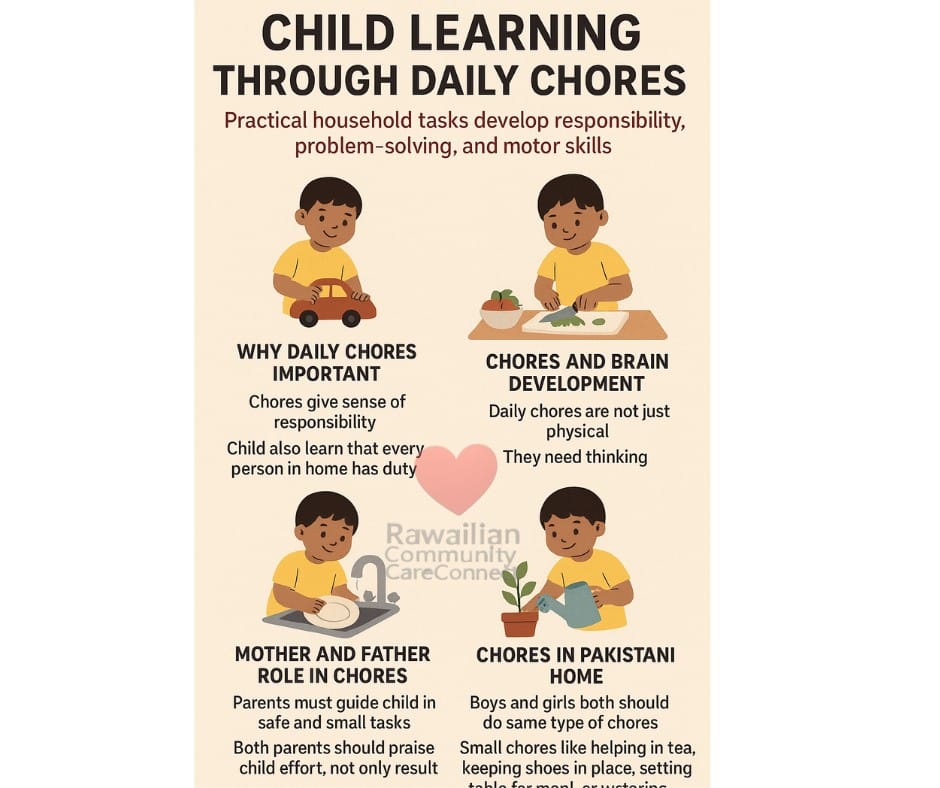
Why Daily Chores Important
Chores give sense of responsibility. When child is asked to put toys back, bring spoon, or fold small cloth, he feel he is part of family work. This make confidence grow. Child also learn that every person in home has duty.
Chores are also natural way of teaching life skill. In future, child need to manage his own clothes, food, and space. If he start early, he become independent faster.
Chores and Brain Development
Daily chores are not just physical. They need thinking. Example: when child help mother in cooking, he learn counting onion, measuring cup of rice, or sorting vegetable. These actions improve math and logic.
Even simple act like pouring water from jug to glass improve motor skill and hand control. Folding clothes teach order and sequence. Cleaning table or arranging shoe rack give sense of organization.
Chores also improve memory. Child remember what to do first, what to do after. Step by step habit improve planning skill.
Mother and Father Role in Chores
Parents must guide child in safe and small tasks. Mother can involve child in kitchen like washing vegetable, wiping plate, or mixing salad. Father can involve child in outside work like watering plants, cleaning car, or arranging tools.
Both parents should praise child effort, not only result. Praise make child happy and more ready to help again. If child make mistake, parents should guide with patience.
Chores in Pakistani Home
In Pakistan, children mostly see mother doing housework. Father involvement less. If parents both encourage chores, child learn equality. Boys and girls both should do same type of chores. This break wrong idea that only girls do house work.
Small chores like helping in tea, keeping shoes in place, setting table for meal, or watering plants are safe and useful for Pakistani family.
How to Start
Start with small easy task according to age.
Show by example, not only order.
Do task together first, then let child try alone.
Make chores daily habit, not punishment.
Give praise for effort.
Discover more from Rawallian Community CareConnect
Subscribe to get the latest posts sent to your email.