
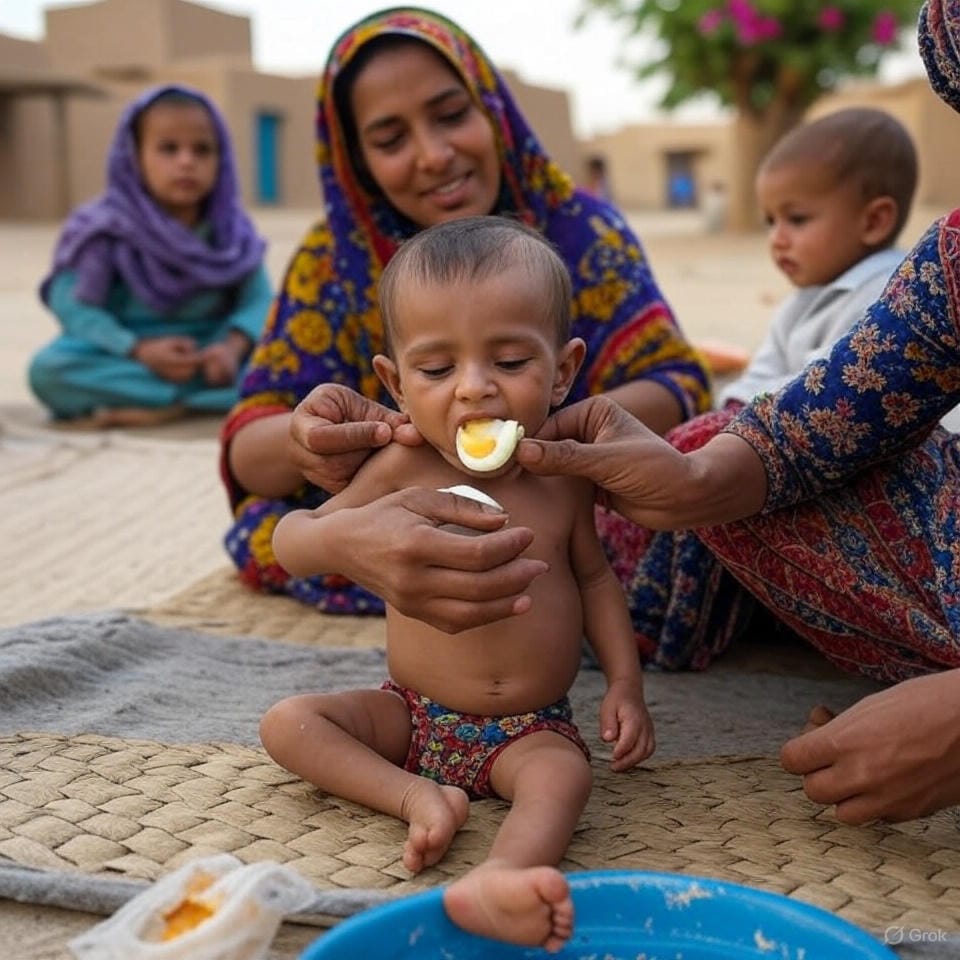
The Common Misunderstanding of Using Ghee as a Sole Calorie Source
Hello, friends! Let’s chat about ghee—our desi kitchen superstar! In Sindh, Balochistan, and Khyber Pakhtunkhwa (KP), we all love adding ghee to bread, rice, or sweets for that extra zing and energy. Some folks think ghee alone can fix malnutrition for our little ones, especially when they look thin. But hold on—ghee can’t do it all by itself! This blog will break that myth, tell you why too much ghee isn’t the full solution, and share one easy tip to mix it with veggies for a healthier diet. Let’s get started with some fun!
Why Ghee is a Rockstar (But Needs a Team)
Ghee is amazing, yaar! Made from butter, it’s loaded with calories to give energy for playing, studying, and growing. A little dab of ghee can pep up any meal, and its healthy fats are great for kids’ brains and bodies. In areas like Sindh, Balochistan, and KP, where good food can be tough to find, ghee feels like a blessing. But here’s the twist—it misses out on vitamins and minerals like iron, vitamin A, and calcium. Think of ghee like a fast bike—it gives speed but won’t take you everywhere. You need more than just calories to stay fit and strong!
The Big Mix-Up About Ghee
So why do some of us think ghee is the only answer? In many village lanes, people believe slathering extra ghee on food will make kids healthy and chubby. Parents might add heaps of ghee to bread or pudding, thinking it’s a magic trick for malnutrition. This idea might come from old times when food was scarce, and ghee was the go-to energy boost. But listen up—too much ghee without other foods can cause “hidden hunger.” That means your kid looks okay outside but lacks important nutrients inside. Not cool, right?
Malnutrition: The Real Enemy
Malnutrition is like a sneaky enemy in Sindh, Balochistan, and KP. It happens when kids don’t get enough nutritious food, making them weak, short, or sick. In these areas, many kids face stunting or anemia because their diet misses out on vitamins and minerals. Ghee gives calories, sure, but without veggies, lentils, or fruits, kids won’t get the full power-up they need. That’s why teaming ghee with other foods is the real hero to beat malnutrition and keep our kids happy and healthy!
Why Too Much Ghee Isn’t the Magic Wand
Picture ghee as a quick rickshaw ride—it gives energy but won’t take you to every stop. Too much ghee and no other foods can mess things up. It lacks fiber, which keeps your tummy happy and regular. Plus, it can fill kids up without giving them vitamins like A for sharp eyes or iron for strong blood. And if ghee is the only star, kids might gain weight but not real health—we want them to grow tall, fast, and strong! So, balance is the key, friend!
Busting the Myths with a Laugh
Let’s clear some funny myths about ghee:
Myth 1: More ghee means a healthier child. No way, friend! Kids need veggies and proteins too, not just ghee!
Myth 2: Ghee fixes all hunger. It gives energy, but it won’t stop “hidden hunger” without other nutrients.
Myth 3: Ghee alone grows kids. Growth needs a full team—ghee plus veggies, lentils, and fruits!
Myth 4: Adding other foods is tough. Not true! A little planning makes meals tasty and balanced.
One Easy Tip: Pair Ghee with Veggies!
Here’s a simple tip: add a small spoon of ghee to a plate of cooked veggies like spinach, carrots, or okra every day. Cook the veggies until soft, mix in a teaspoon of ghee for taste, and serve with bread or rice. This mix gives kids energy from ghee plus vitamins and minerals from veggies. For example, spinach with ghee adds iron to fight anemia, while carrots bring vitamin A for bright eyes. Start with a little portion—maybe 2-3 spoons—and let kids enjoy the taste. It’s like a yummy treat!
Making It Fun and Simple
Getting kids to eat veggies with ghee can be a blast! Try these ideas:
Mix it up: Cook a veggie mix (like peas and potatoes) with a dash of ghee and call it “super food.”
Play a game: Let kids pick their favorite veggie to cook with ghee each day.
Eat together: Have the whole family enjoy it so kids see it’s yummy for all.
Keep it local: Use veggies from the market to save money and add local flavor.
Talking to the Family
Sometimes, grandparents might say, “Just ghee is enough—it worked in our days!” Respect their advice but share the new plan. Say, “Let’s try veggies with ghee to make our kids even stronger!” Show how it’s pocket-friendly and helps kids grow better. With time, they’ll see the glow in healthy, happy kids.
Let’s Wrap It Up!
Ghee is our kitchen rockstar, but it’s not a one-man show. The idea that it’s the only calorie source for kids comes from good hearts, but it’s not the full story. In Sindh, Balochistan, and KP, where malnutrition is a challenge, mixing ghee with nutrient-rich veggies is the winning trick. With one easy tip—ghee plus veggies—you can give kids energy and health in every bite. So, ditch the myth, get creative with your plate, and watch our kids shine!
Discover more from Rawallian Community CareConnect
Subscribe to get the latest posts sent to your email.