• About Us
  • Rules for Editors
  • How It Works
  • Terms of Use
  • Privacy Policy
  • Contribute
  • Contact Us
  • Login
  • Register
Rawallian Community CareConnect
  • Home
  • Categories
  • Ask Question
  • About Us
  • Contact
No Result
View All Result
  • Home
  • Categories
  • Ask Question
  • About Us
  • Contact
No Result
View All Result
Rawallian Community CareConnect
No Result
View All Result
  • About Us
  • Rules for Editors
  • How It Works
  • Terms of Use
  • Privacy Policy
  • Contribute
  • Contact Us
Home Paediatric Autism Spectrum Disorder

Enhancing Communication for Nonverbals

Saima Ijaz by Saima Ijaz
October 28, 2025
in Autism Spectrum Disorder
Reading Time: 4 mins read
2 0
A A
0
Enhancing Communication for Nonverbals
2
SHARES
58
VIEWS
Share on FacebookShare on Twitter
This entry is part 2 of 5 in the series Autism basics

Autism basics
  • Connecting with Nonverbals
  • Enhancing Communication for Nonverbals
  • Sensory Sensitivities and Behaviours
  • Sensory Play for Children with Autism
  • Pre-academics

A Guide for Caregivers and Therapists

Introduction

This guide shows a clear and simple way to help nonverbal children with Level 2 and 3 autism spectrum disorder communicate better. It shares steps used by an Autism consultant in real-life situations.

Step 1: The First Meeting

Meet the child at home, where they feel comfortable and bring along a variety of items, such as:

  • 1. Sensory toys
  • 2. Pictures of favourite things and characters (chosen after talking with the family)
  • 3. Colourful letters, number, nursery rhymes, favourite character books
  • 4. Building blocks, Lego, Drawing/sketching tools
  • 5. Apps on an iPad or laptop that fit the child’s age and abilities

Set up these items in the room for the child to explore freely. Watch how the child interacts with the items, without asking them to do anything. This helps you see what interests the child, how they react, and what makes them feel safe.

Step 2: Understanding the Child’s Strengths

  • Notice what the child likes: certain pictures, music, movement, or toys.
  • Use these interests to plan activities and help the child learn.
  • Teach the family how to use these strategies every day, so the child gets consistent support.

Step 3: Communication Tools and Methods

Communication is not just only about speech. If a child cannot speak, there are other ways to help them express themselves. These include:

  • 1. Using simple gestures and words for everyday needs (like “Yes”, “No”, “More”, “Eat”, “Drink”, “Toilet”, “Play”, “Mom”, “Dad”). Start with gestures and introduce sign language.
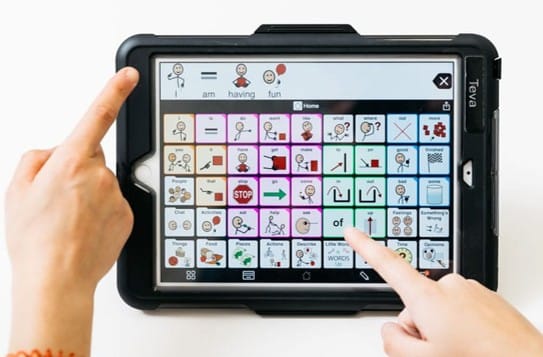
  • 2. Using easy-to-use communication devices or apps that fit the child’s needs.
  • 3. Showing real photographs instead of common symbols, for picture cards or boards.
  • 4. Writing big words and adding small pictures to help children who prefer reading, understand the assciation.
  • 5. Connecting objects with their names through hands-on activities.

These tools have helped my own child and many others with severe autism. They can show what they want or need through words, writing, typing, or digital tools.

Step 4: Building Daily Routines

To help a child use a new way to communicate, follow these routines:

  • Practice using the tool together and give smiles or rewards when the child tries to communicate.
  • Use the device when asking questions or making choices, so it becomes a regular part of life.
  • Start using the device with family and teachers, then add more people as the child gets comfortable.

Step 5: Encouraging Progress

  • Respond quickly and positively when the child communicates, like giving them what they ask for with their device or cards.
  • Keep supporting and practicing every day.
  • Over time, most children become more confident, happier, and better connected to people around them.
  • This makes everyday life easier and more joyful for everyone involved.
Series Navigation<< Connecting with NonverbalsSensory Sensitivities and Behaviours >>

Discover more from Rawallian Community CareConnect

Subscribe to get the latest posts sent to your email.

Tags: Child HealthCommunicationAutism
Share1ShareTweet
Saima Ijaz

Saima Ijaz

(Class of ’89, Autism Consultant, Canada) I have been Planning and Implementing Programs for children with Autism Spectrum Disorder, since 2001. I have a passion for educating families, paraprofessional and professionals associated with ASD in specific and communities at large in general, about basic autism awareness, understanding of the thought process of a neurodiverse mind, along with using adaptive teaching strategies for building communication, social skills and early academics skills. I have pursued my passion, both locally and internationally, via discussion forums, in-person workshops, online events and webinars. Currently I also serve as a Board member for Plan Institute, Canada, and as Family Support Coordinator for Nanaimo Association for Community Living, Nanaimo. For more of my ASD related Articles, please check Autism Solutions :: Forms

Related Posts

Autism Spectrum Disorder

Understanding and Addressing Aggression in Autism

January 7, 2026
16
Why Autism Diagnosis Takes Time
Autism Spectrum Disorder

Why Autism Diagnosis Takes Time

November 25, 2025
37
Understanding and Addressing Self-Harm in Autism
Autism Spectrum Disorder

Understanding and Addressing Self-Harm in Autism

November 13, 2025
31
No Sense of Danger in Children with Autism
Paediatric

No Sense of Danger in Children with Autism

October 29, 2025
22
Encouraging Healthy Intake in Children with Autism
Paediatric

Encouraging Healthy Intake in Children with Autism

October 30, 2025
36
Autistic Children Struggling with Sleep and Hyperactivity
Paediatric

Autistic Children Struggling with Sleep and Hyperactivity

October 27, 2025
65
Next Post

The Common Misunderstanding of Using Ghee as a Sole Calorie Source

Debunking the Taboo of Feeding Eggs to Children

Please login to join discussion

Ask our Experts!

Have questions about common health concerns like colds, allergies, nutrition, or sleep? Don’t guess—get clear, reliable advice from qualified medical professionals. Fill in the form below to Ask the Experts today!

Recent Articles

  • گردے کی ناکامی میں مبتلا مریض کی خوراک۔
  • Why Taking Iron Pills and Malaria Medicine During Pregnancy Matters for Baby’s Birth Weight
  • Seasonal Changes in Breast Milk Nutrients: How Weather Affects Moms and Babies in Farming Areas
  • Are antibiotics necessary in recent onset sore throat?
  • Understanding and Addressing Aggression in Autism

About Rawallian Community CareConnect

Rawailian Community CareConnect is dedicated to empowering caregivers with simple, practical, and compassionate health information in everyday language. We provide a free, bias-free platform where professionals share short articles, videos, and podcasts—under 10 minutes—on caregiving topics across medical specialties. Our goal is to make knowledge accessible, support diverse communities through multilingual translations, and foster connection via forums and expert advice, all while growing collaboratively with minimal resources.

Quick Links

  • About Us
  • Rules for Editors
  • How It Works
  • Terms of Use
  • Privacy Policy
  • Contribute
  • Contact Us

Top Posts & Pages

  • Home 1

Find by Categories

  • Autism Spectrum Disorder (11)
  • Cardio (4)
  • Disease (3)
  • Ear & Nose (1)
  • Early Childhood Development (7)
  • Emergency Care (1)
  • Gastroenterology (4)
  • Gynae (1)
  • Health (8)
  • Malnutrition (7)
  • Maternal & Infant (1)
  • Medicine (4)
  • Nutrition (10)
  • Ortho (2)
  • Paediatric (7)
  • Psychiatry (3)
  • Public Health (5)
  • Uncategorized (1)
  • About Us
  • Rules for Editors
  • How It Works
  • Terms of Use
  • Privacy Policy
  • Contribute
  • Contact Us

© 2025 Rawallian Community CareConnect

Welcome Back!

Sign In with Facebook
Sign In with Google
OR

Login to your account below

Forgotten Password? Sign Up

Create New Account!

Sign Up with Facebook
Sign Up with Google
OR

Fill the forms below to register

All fields are required. Log In

Retrieve your password

Please enter your username or email address to reset your password.

Log In

Add New Playlist

No Result
View All Result
  • Home
  • Rules and SOPs for Editors
  • Categories
  • About Us
  • My account
  • Contact
  • Login
  • Sign Up

© 2025 Rawallian Community CareConnect